
Technical FAQ
What Problems Can Occur in Blister Packaging?
Blister packaging defects can come from a single fault or from interacting factors. Common cause areas include material compatibility, forming conditions, sealing setup, tooling alignment, feeding behavior and operating consistency. The visible symptom alone is rarely enough to identify the root cause.
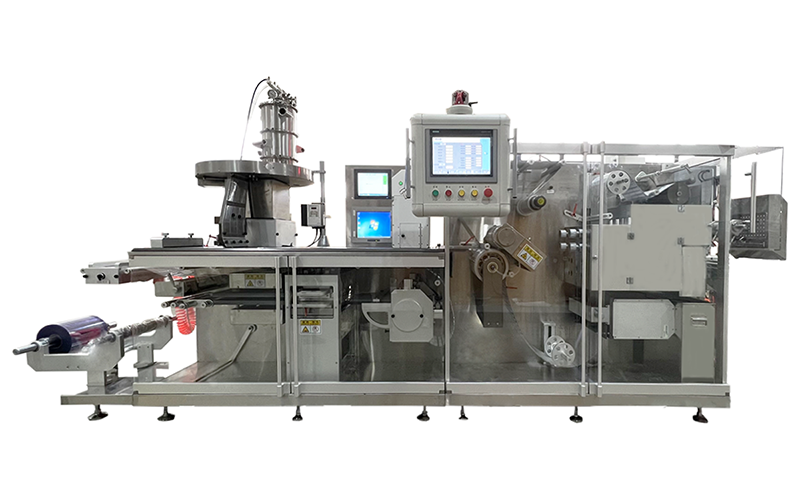
Direct Answer
Blister packaging problems are diagnosed by tracing the visible defect to material, forming, sealing, tooling, feeding or operating evidence; the symptom alone does not establish the cause.
On this page
- The short answer: most blister packaging defects are root-cause problems, not one single machine problem
- A symptom-to-likely-cause map for common blister packaging defects
- How material compatibility creates forming, sealing, and protection issues
- What to check in the sealing system when packs leak, lift, or delaminate
- How tooling, alignment, and feeding errors show up on the line
- Why process settings and operating conditions can create inconsistent results
- When to involve Aligned Machinery and what project inputs buyers should prepare
- FAQ
The short answer: most blister packaging defects are root-cause problems, not one single machine problem
Blister packaging is a process, not just a machine purchase. Results depend on how the product, blister format, packaging material, feeding condition, output target, and line workflow work together.
In practice, buyers often see one symptom and assume one solution:
- weak seals = sealing station problem
- cracked cavities = forming station problem
- product misplacement = feeding problem
- poor appearance = operator problem
Sometimes that is true, but often the defect sits across more than one step. For example, a seal defect may begin with an uneven cavity, a warped web, a product that sits too high, or a lidding material that does not behave consistently under the actual operating conditions.
This is also why nominal output alone is not enough to judge project fit. The dosage form and feeding condition, primary package format, packaging material and dimensions, utilities, and downstream scope all influence final blister packaging performance on the line.
A symptom-to-likely-cause map for common blister packaging defects
The following is a general troubleshooting checklist, not a diagnosis or a validated Aligned Machinery process window. Actual causes should be confirmed using the specific product, material, tooling, machine configuration and test results.
A practical way to diagnose blister packaging problems is to start with the visible symptom, then test likely causes across material, sealing, tooling, and process conditions.
| Defect symptom | Likely cause areas to investigate first |
|---|---|
| Weak seal or leaking pack | Lidding/forming material pairing, seal contamination, product interfering with seal area, sealing temperature/pressure/dwell, worn or uneven sealing tooling |
| Lifted lid or delamination | Material mismatch, poor heat distribution, uneven sealing pressure, web tension issues, surface contamination |
| Incomplete forming or shallow cavities | Forming material behavior, heating condition, tooling wear, cavity design fit, unstable operating settings |
| Cracked blister cavities | Material too brittle for the process, excessive stress during forming, poor material handling, tooling condition |
| Product sitting outside cavity or tilted product | Feeding condition, product shape variation, orientation issues, tooling registration, transfer timing |
| Crushed tablets or damaged capsules | Product fragility, feeding path, cavity depth/shape mismatch, alignment error, handling speed |
| Uneven pack appearance or bad registration | Web tracking, indexing accuracy, tooling alignment, tension variation, inconsistent operating conditions |
| Repeating defect in one lane or one position | Tool wear, localized sealing pressure issue, alignment problem, station-specific contamination |
This map should not be treated as a one-to-one rulebook. The value is in narrowing the search. If one symptom appears randomly across the web, the cause may be process instability or material variation. If it repeats in the same position, tooling or alignment becomes more likely.
How material compatibility creates forming, sealing, and protection issues
Material compatibility is one of the first things buyers should review because it influences almost every downstream result: cavity formation, seal behavior, visual consistency, and package protection.
Common buyer mistakes include focusing only on the machine model while leaving material details too general. In reality, the line needs to match:
- dosage form and feeding condition
- blister format and cavity layout
- packaging material and dimensions
- operating environment
- downstream handling and cartoning workflow
If the product is sensitive, irregular, dusty, fragile, or dimensionally inconsistent, that can affect both forming and sealing results. If the packaging material pair is not well matched to the format and process, buyers may see shallow cavities, stress marks, weak seals, or inconsistent appearance.
This is why changing material without reviewing the rest of the process can create new problems instead of solving the original one. A better approach is to compare the defect pattern with the product shape, material behavior, and actual format being run.
What to check in the sealing system when packs leak, lift, or delaminate
When a blister pack leaks, lifts, or delaminates, buyers should avoid assuming that the sealing station alone is at fault. Seal integrity depends on the full sealing interface and on what happens before the seal is made.
Practical checks usually include:
- whether the product or powder is entering the seal area
- whether the forming web is flat and stable before sealing
- whether the lidding and forming materials are appropriate for the format
- whether sealing pressure is even across the width
- whether the sealing surface or tooling condition is consistent
- whether line conditions are changing between runs or shifts
A useful diagnostic question is: Does the defect appear everywhere, or only in certain lanes, positions, or time periods?
- If defects cluster in one position, tooling condition or alignment may be involved.
- If defects increase during longer runs, heat balance, contamination, or operating consistency may be involved.
- If defects appear after a material change, material pairing or web behavior becomes a stronger suspect.
Before changing equipment, buyers should review the relationship between seal defects and the actual product format, dimensions, and line conditions.
For pharmaceutical packaging, visual inspection alone does not establish package integrity or shelf life. Acceptance criteria and test methods should be defined and approved by the manufacturer’s qualified quality and packaging teams.
How tooling, alignment, and feeding errors show up on the line
Tooling, alignment, and feeding issues often create defects that are easy to misread as material or sealing problems.
Typical signs include:
- tablets or capsules not centered in cavities
- product bridging, bouncing, or tipping before sealing
- repeating cavity defects in the same pattern
- print or lidding registration drift
- crushed or chipped product during transfer
- uneven blister appearance across lanes
These issues are often connected to workflow roles across the line, not just one station. Buyers should separate:
- the machine role
- the package role
- the product handling role
- the upstream and downstream workflow impact
For example, a feeding issue may begin with the dosage form itself: shape, coating, fragility, dust, static, or orientation behavior. If the product does not feed consistently, the sealing station may only be where the defect becomes visible.
This is one reason to define feeding condition early when discussing a blister project. Tooling and package layout should be reviewed based on how the actual product enters, settles, and transfers through the line.
Why process settings and operating conditions can create inconsistent results
Even with a suitable machine concept, results can become inconsistent when operating conditions are not stable.
Common process-related causes include:
- setup changes between shifts
- different raw material behavior between batches
- inconsistent product feed condition
- unstable web handling
- line speed changes without corresponding setup review
- environmental or utility variation affecting repeatability
For buyers, the key point is that process boundaries matter. A blister line should be evaluated around the real operating context, not only the target output figure. Two projects with similar output targets may behave very differently if the product, material, dimensions, or downstream handling requirements are different.
When investigating instability, it helps to compare:
- when the defect appears
- whether it is batch-related or position-related
- whether it changes with operators, materials, or speeds
- whether it started after a format, tooling, or material adjustment
That structured review often saves time because it prevents unnecessary changes to equipment when the root cause sits in setup discipline or process variation.
When to involve Aligned Machinery and what project inputs buyers should prepare
Aligned Machinery supports pharmaceutical machinery, packaging machinery, and production workflow planning. For blister packaging projects, we can help review fit at the level of product, package format, workflow, and line scope when your project requirements are clear.
At this stage, the most useful supplier discussion is not “Which machine is best?” but “Which factors are actually driving the defect or limiting the project fit?” If you are reviewing a new line, format change, or recurring packaging issue, prepare the details that define the real process boundary.
Buyers should prepare:
- product type and dosage form
- product size, shape, and fragility
- feeding condition and orientation behavior
- blister cavity layout and package format
- packaging material and dimensions
- lidding material details
- target output with units
- current defect photos or samples
- notes on when the defect appears
- current operating conditions and utilities
- upstream and downstream equipment scope
- destination market and documentation expectations
If you are comparing project options, you may also find it helpful to review our solid dosage packaging equipment category for broader packaging workflow context and our blister packaging machine overview for packaging line background.
For a project-specific discussion, contact Aligned Machinery to discuss your blister material, product format, and packaging workflow requirements.