Packaging Guide
How to Select a Blister Packaging Machine
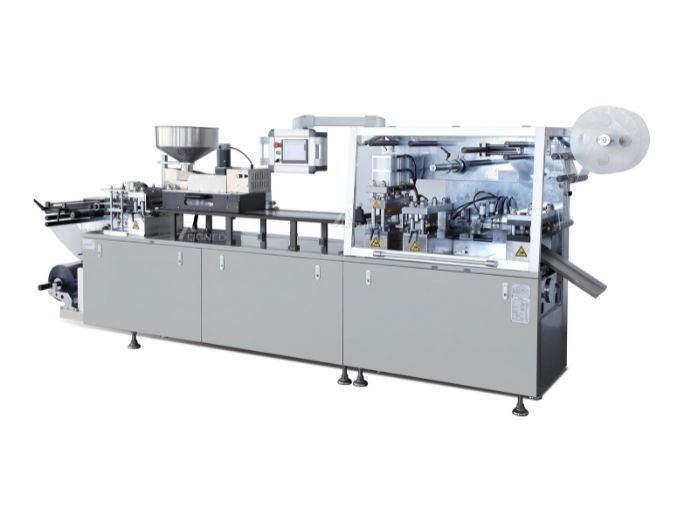
A blister packaging machine forms cavities, feeds product, seals lidding material, and discharges finished blisters for downstream packaging. For pharmaceutical and nutraceutical buyers, the best way to choose a Blister Packaging Machine is not to start with headline speed alone. Start with the blister pack format, forming and lidding materials, dosage form and feeding behavior, tooling requirements, and how the machine must connect to cartoning or the rest of the packaging line. Aligned Machinery supports buyers in solid dosage packaging projects where machine selection depends on real production conditions rather than a generic machine label. In practice, that means defining the package first, then matching the equipment scope to the workflow.
Direct Answer
A blister packaging machine forms cavities, feeds product, seals lidding material, and discharges finished blisters for downstream packaging.
On this page
- Quick answer: what a blister packaging machine does and how buyers should evaluate one
- Start with the blister pack format before comparing machine designs
- How forming film and lidding material choices affect machine selection
- Match the feeding system to tablets, capsules, and product handling needs
- Compare tooling, changeover needs, and format flexibility across projects
- Check output expectations against cartoning and downstream line interfaces
- What to prepare before asking Aligned Machinery or any supplier for a quotation
- FAQ
Quick answer: what a blister packaging machine does and how buyers should evaluate one
In solid dosage packaging, a blister packaging machine is used to form the blister cavity, place tablets, capsules, or related compatible solid products into that cavity, seal the package with lidding material, and discharge the finished blister to the next packaging step.
That basic description is useful, but it is not enough for a buying decision. A practical evaluation should answer five questions early:
- What blister format do you need?
- What forming and lidding materials will be used?
- How will the product feed and behave in the machine?
- How many formats or future SKUs must the tooling support?
- What must happen after blister discharge, such as inspection, batching, or cartoning?
Aligned Machinery offers blister packaging equipment information for tablet, capsule, and related solid-dose blister applications. Aligned Machinery also recommends reviewing dosage form and feeding condition, package format, material and dimensions, operating environment, utilities, and downstream scope before final model selection. That is why nominal output should be treated as one input, not the only input.
Start with the blister pack format before comparing machine designs
A package-format-first approach helps avoid a common purchasing mistake: narrowing to a machine model before the pack layout is fully defined.
Start by documenting the actual blister you want to produce:
- cavity count per blister
- pocket layout
- product orientation
- overall blister dimensions
- whether the blister is the primary pack only or part of a wider secondary packaging workflow
This matters because format decisions affect nearly every later decision: forming behavior, sealing area, tooling design, feeder setup, discharge handling, and cartoning interface.
For example, a simple round tablet in a standard regular layout may require a very different tooling and feeding approach from an oblong tablet, a coated tablet prone to marking, or a hard capsule that must remain correctly oriented. Even when two buyers request similar output targets, their final machine configurations may differ because the package format and product behavior differ.
A useful planning step is to rank requirements in this order:
- required package format
- required material structure
- product handling sensitivity
- downstream packaging path
- output objective
That sequence often leads to better machine-fit decisions than comparing equipment only by general category.
How forming film and lidding material choices affect machine selection
Material choice has a direct effect on machine selection because the final tooling and packaging configuration depend on the product and blister material.
For buyers, the key issue is not just naming a preferred material family. It is making sure the machine project is defined around the actual forming web, lidding structure, and package dimensions to be used in production.
At a practical level, ask these questions early:
- What forming web structure is planned for the blister?
- What lidding material will be sealed to it?
- Are there barrier, appearance, or market-specific packaging preferences that affect the pack design?
- What drawing or sample blister can be shared for review?
These decisions influence tooling, forming method, seal setup, and line validation planning. They also affect the amount of development work needed before production release.
Because material combinations vary by project, buyers should avoid assuming that any blister machine can handle every forming and lidding structure without review. The more specific your material information is, the faster a supplier can judge format fit and quotation scope.
Match the feeding system to tablets, capsules, and product handling needs
Feeding is where many blister projects become more complex than they first appear. The same machine category may need different configuration decisions depending on whether the product is a tablet, capsule, or another compatible solid product.
Aligned Machinery’s blister packaging scope includes tablets, capsules, and related solid products, and Aligned Machinery recommends defining dosage form and feeding condition before final equipment configuration. That is an important point for buyers because dosage form alone does not tell the full story. You also need to think about handling behavior.
Key product-handling questions include:
- Is the product fragile, dusty, slippery, or prone to chipping?
- Does it require orientation control?
- Is shape consistency tight or variable?
- Are there cosmetic surfaces that should be protected?
- Will upstream product supply arrive continuously or in batches?
For example, a robust standard tablet may allow a simpler feeding discussion than a capsule that must be presented consistently, or a coated tablet that should avoid unnecessary scuffing. In multi-product environments, the feeding discussion becomes even more important because product behavior can affect reject strategy, jam risk, and cleaning workflow.
The buyer takeaway is straightforward: do not request a machine only by naming the dosage form. Share the feeding condition and product behavior as well.
Compare tooling, changeover needs, and format flexibility across projects
Tooling deserves early attention whenever you expect more than one SKU, more than one blister size, or any future packaging expansion.
Even without discussing exact changeover methods or timings, buyers can still evaluate format flexibility in a disciplined way. Ask:
- How many blister formats are required at launch?
- How different are those formats from each other?
- Will the same machine be expected to support future SKUs?
- Which parts are likely to be format-specific?
- How often will production switch between formats?
A single-SKU project may prioritize stable repeatability for one format. A contract manufacturer or diversified nutraceutical producer may care more about how format variation affects tooling scope, operator workflow, and spare-parts planning.
Aligned Machinery advises that final machine configuration cannot be selected from nominal output alone because product format, material behavior, utilities, operating conditions, and required interfaces also affect the outcome. Tooling is one of the clearest examples of that principle. Two projects with similar output goals may still require different tooling strategies because their blister dimensions and material structures are different.
Check output expectations against cartoning and downstream line interfaces
Output should always be evaluated in the context of the full line. A blister machine that appears suitable on paper may still create bottlenecks if the discharge flow, inspection steps, or cartoning rhythm are not aligned.
Before finalizing equipment discussions, buyers should clarify:
- whether blisters go directly to cartoning
- whether intermediate inspection or accumulation is required
- how batch coding or traceability fits into the workflow
- what discharge style or handoff condition downstream equipment expects
- whether the project includes only the blister machine or a wider packaging scope
This matters because real packaging lines do not operate as isolated units. If the cartoner expects a certain presentation, stack condition, or feed rhythm, the blister machine decision should account for that early. The same applies if the project includes inspection equipment or other secondary packaging steps.
Aligned Machinery provides packaging machinery and production workflow planning information, so buyers can use Aligned Machinery as a discussion partner for workflow fit. Final interface details and supply boundaries should still be reviewed project by project so the machine scope matches the actual line requirement.
For broader context, you can also explore solid dosage packaging equipment for integrated line planning and review a Aligned Machinery blister machine example for solid-dose packaging applications.
What to prepare before asking Aligned Machinery or any supplier for a quotation
The fastest way to improve quotation quality is to prepare the project inputs before the inquiry goes out. A strong RFQ package reduces back-and-forth and makes line-fit review more accurate.
Buyers should prepare:
- product name and dosage form
- feeding condition and any handling concerns
- blister drawing, pocket layout, or sample pack
- package dimensions
- forming and lidding material preference
- target output with units
- available utilities
- operating environment details relevant to installation
- destination market
- upstream scope and downstream scope, including cartoning needs
If possible, also share whether the machine is for a new line, a line expansion, or replacement of existing equipment. That gives better context for interface planning, operator workflow, and site constraints.
When project requirements fit, Aligned Machinery can discuss blister packaging requirements, format needs, and production workflow fit. The more complete the initial information is, the easier it is to move from general interest to a practical equipment discussion.
To get started, contact Aligned Machinery to discuss your blister packaging requirements, format needs, and production workflow fit.