Buyer FAQ
Which Machine Is Used for Sealing Bottles?
The machine depends on what “sealing” means in the package. A screw cap is applied by a capping machine; an aluminum-foil liner is commonly bonded to the bottle mouth by an induction sealing machine; a crimp closure uses a crimping machine; and a press-fit closure uses application-specific pressing equipment. Some lines require both capping and induction sealing because tightening the cap and bonding the liner are separate operations.
Direct Answer
Use a capper to apply or tighten screw caps, an induction sealer to bond a compatible foil liner to the bottle mouth, a crimper for mechanically deformed closures and application-specific equipment for press-fit or special closures.
On this page
- The short answer: bottle sealing machines are chosen by closure type
- What buyers mean by sealing: capping, crimping, press-fit, and liner-based closure steps
- Closure type to machine mapping for pharmaceutical and nutraceutical bottles
- Where the sealing step sits in a bottle filling and packaging line
- How bottle, cap, and product details change the machine recommendation
- How to evaluate line integration without turning this into a generic filling guide
- What to send Aligned Machinery for a practical machine recommendation
- FAQ
The short answer: bottle sealing machines are chosen by closure type
If the cap only needs to be applied and tightened, use a capping machine. If a compatible foil liner must be bonded to the bottle mouth, use an induction sealer, commonly after capping. If the closure is mechanically deformed around the neck, use a crimping machine.
These are general industry categories. Aligned Machinery’s published evidence confirms selected liquid filling, stoppering and capping equipment; it does not confirm that Aligned Machinery supplies every crimping, press-fit or induction-sealing machine. Confirm the required technology and current supply scope before quotation.
What buyers mean by sealing: capping, crimping, press-fit, and liner-based closure steps
A liner is not a machine category by itself. Depending on the liner design, a package may rely on cap compression, pressure-sensitive adhesion or a separate induction-sealing operation. Bottle-neck material, cap design, liner specification and required integrity test determine the process.
In many bottle packaging lines, sealing is shorthand for several different operations. Understanding the terminology helps avoid specification mistakes early in a project.
Capping usually means applying and tightening a cap onto a threaded bottle finish. This is common when bottles use screw caps and the closing step must be consistent with the container and cap design.
Crimping generally means mechanically deforming a closure component so it locks onto the container. This is a different machine action from standard screw capping and normally needs a machine designed for that closure style.
Press-fit or snap closure refers to caps or closure parts that are pushed into position rather than screwed on. These applications depend heavily on closure geometry and container consistency.
Liner-based closure steps can involve a closure system where the cap, liner, and bottle finish work together as part of package integrity. In those cases, buyers should evaluate the full closure structure, not just the visible cap style.
The key point is simple: two bottles may look similar from a distance, but if their closures work differently, they may require different machine designs. That is why final machine selection should not be based on output alone. Product format, operating conditions, utilities, dimensions, interfaces, and downstream scope also affect the final configuration.
Closure type to machine mapping for pharmaceutical and nutraceutical bottles
This is the core decision logic buyers usually need.
| Closure type or closing method | Typical machine category | What buyers should verify |
|---|---|---|
| Threaded screw cap | Capping machine | Bottle neck finish, cap dimensions, cap feed method, tightening method |
| Crimp-style closure | Crimping machine | Closure material, crimp profile, container fit, inspection needs |
| Press-on or snap cap | Press-fit or snap-cap machine | Insertion force, cap orientation, bottle stability during application |
| Stopper plus outer cap | Stoppering and capping system | Stopper presentation, cap application sequence, container handling |
| Pump, spray head, or special closure | Application-specific closing equipment | Closure geometry, dip tube or assembly details, orientation and feeding |
For pharmaceutical and nutraceutical buyers, this mapping matters because packaging lines often need consistent handling of bottles, closures, and inspection steps across a range of formats. A machine that suits one cap style may not suit another, even if the bottle volume is similar.
Aligned Machinery offers bottle-related filling and closing equipment information within its liquid machinery scope, including equipment roles built around filling and closing workflows. Where a project includes a standard bottle filling and capping requirement, that workflow can often be reviewed alongside related line steps. For broader closure categories such as crimp-specific or other special sealing methods, buyers should define the closure clearly at the inquiry stage so the correct machine route can be evaluated.
Where the sealing step sits in a bottle filling and packaging line
The bottle sealing or closing step is usually one stage in a larger sequence, not a standalone decision.
A typical high-level flow may include:
- Bottle infeed and presentation
- Product filling
- Stoppering or inner closure step if required
- Cap application or bottle closing
- Inspection or rejection handling
- Labeling
- Cartoning, collection, or other downstream packaging
This sequence matters because the closure machine must match what happens before and after it. If bottles arrive with unstable spacing, if caps need orientation, or if downstream labeling requires a consistent bottle position, the closure step has to be planned as part of the line.
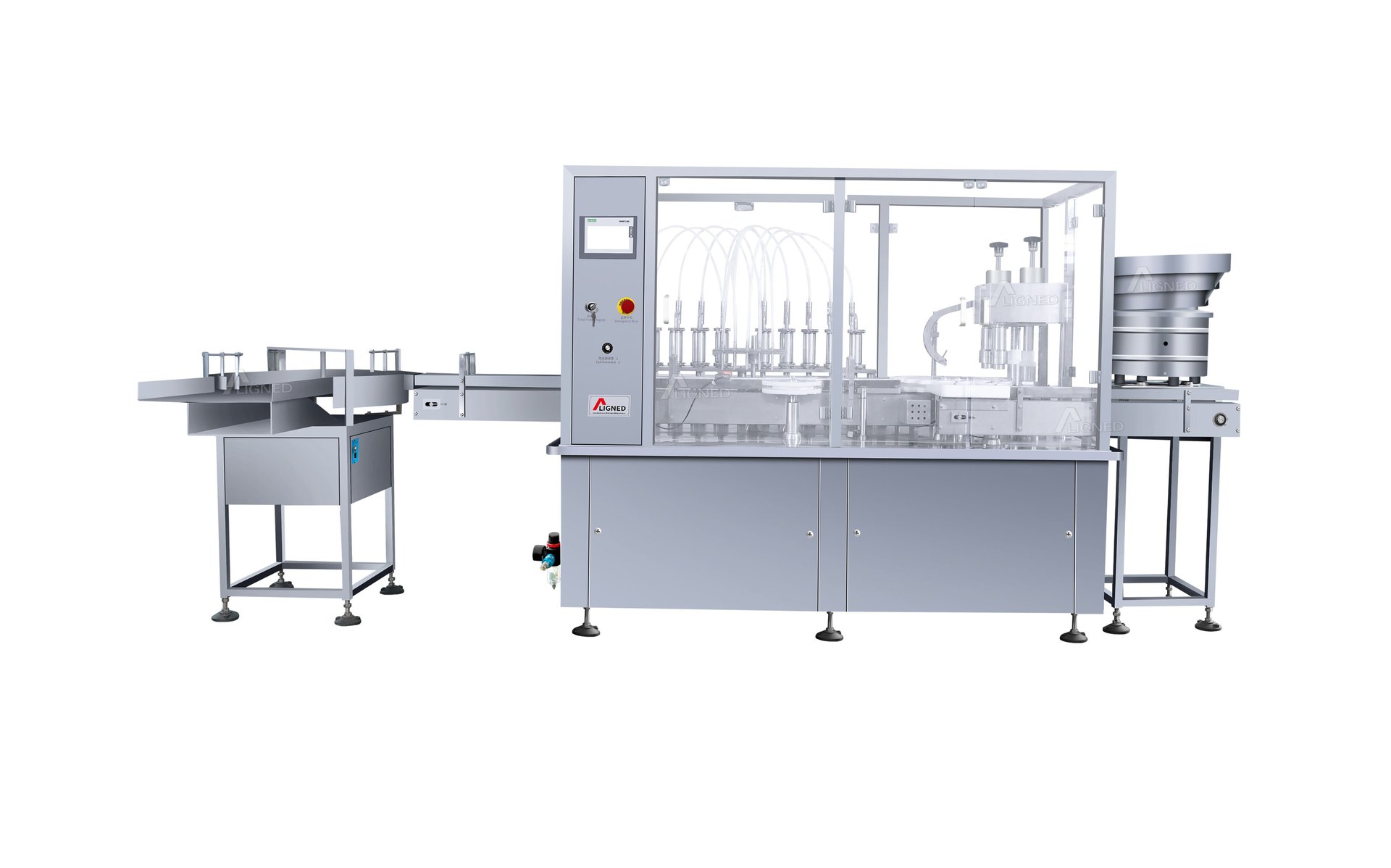
Aligned Machinery's liquid machinery scope includes equipment roles for liquid filling and closing, such as the ALS Series Liquid Filling, Stoppering and Capping Machine and the ALFC Series Automatic Liquid Filling and Capping Monobloc. These product families are relevant when a project involves integrated filling and closing logic rather than a completely isolated closure station. Final fit still depends on the product, container, and closure requirements for the project.
If you are planning a full packaging workflow, it can also help to review Aligned Machinery's liquid machine equipment range for filling and closing applications and liquid filling line solution pages for upstream and downstream workflow.
How bottle, cap, and product details change the machine recommendation
Small packaging details can change the recommended machine category or configuration.
The most important inputs usually include:
- Bottle material and geometry: rigid or squeezable container behavior, bottle stability, neck finish, and size range
- Closure type: screw cap, stopper, pump, spray head, press-fit cap, or other closure structure
- Product characteristics: liquid behavior, contact material expectations, and handling needs
- Fill volume and format range: whether the project uses one bottle size or multiple formats
- Target output objective: required production goals, shift plan, and automation expectations
- Downstream handling: labeling, coding, cartoning, case packing, or manual collection
For example, a buyer requesting “a bottle sealing machine” may actually need one of several different solutions:
- a standalone capper after an existing filler
- a filling-and-capping monobloc
- a stoppering-and-capping machine for a multi-step closure process
- a closure station that must hand off directly to labeling or secondary packaging
This is why Aligned Machinery typically reviews material, format, output objective, and process boundary before a final equipment route is defined.
How to evaluate line integration without turning this into a generic filling guide
For this topic, the most useful integration questions are about the closure step’s interfaces, not a broad comparison of all filling technologies.
Buyers should review:
- How bottles enter the closing station
- How caps or closures are fed, sorted, or presented
- Whether the closure needs orientation before application
- How bottle stability is maintained during closing
- What inspection point follows the closing step
- How accepted and rejected bottles are handled
- How the machine hands off to labeling, cartoning, or collection
- What utilities and interface conditions are available on site
This prevents a common project mistake: selecting a bottle capping or sealing machine in isolation, then discovering that cap feeding, bottle transfer, or downstream handoff does not match the line.
For pharmaceutical and nutraceutical manufacturers, line integration is often just as important as the closure method itself. Even if the closure category is correct, the project can still slow down if infeed conditions, required interfaces, or downstream packaging scope are not discussed early.
What to send Aligned Machinery for a practical machine recommendation
To move from a general question to a useful recommendation, buyers should prepare a short project brief. This helps Aligned Machinery review equipment role, workflow fit, interfaces, and supply scope more accurately.
Please send:
- Bottle type and bottle material
- Bottle size range or drawing
- Cap or closure type
- Whether the project uses screw capping, stoppering plus capping, press-fit closure, or another method
- Product or material details
- Fill volume or package format range
- Target output with units
- Available utilities
- Destination market
- Required upstream equipment
- Required downstream equipment such as inspection, labeling, or cartoning
If your project already includes photos, samples, or cap drawings, those are often useful because closure geometry is one of the fastest ways to narrow machine type.
Aligned Machinery covers packaging machinery and production workflow planning on its website, and final equipment, interfaces, documentation, and supply scope are best reviewed against the actual project. To get started, contact Aligned Machinery for a bottle packaging project review.