Dosage Form Guide
What Is Oral Thin Film and How Is It Manufactured?
Oral thin film is a thin, unit-dose film intended for administration in the oral cavity. Depending on the product definition, it may be designed to disintegrate in the mouth or follow another defined oral route. This article describes manufacturing workflow only and does not make claims about onset, absorption, bioavailability, efficacy or suitability for any patient group.
Direct Answer
Oral thin film is a thin unit-dose format made through formulation preparation, film forming, drying, converting and project-specific primary packaging; the exact dosage-form and regulatory definition must be confirmed for the intended product and market.
On this page
- Oral thin film in one clear definition
- Where oral thin film fits in pharmaceutical and nutraceutical manufacturing
- From formulation concept to finished strip: the ODF workflow
- How forming and drying choices affect downstream production
- What slitting, cutting, and pouching need to protect
- How to match ODF process needs to equipment roles
- How Aligned Machinery supports ODF workflow discussions
- FAQ
Oral thin film in one clear definition
Oral thin film, often shortened to ODF, is an oral dosage form produced as a thin film or strip rather than as a tablet, capsule, or liquid. In manufacturing terms, that means the product is built as a continuous or semi-continuous film web before being converted into individual units.
This matters because oral thin film is not just a formulation question. It is also a converting and packaging question. Buyers need to think about:
- the film formulation and target dose
- the intended unit size
- the web width and material behavior during production
- whether the main project scope is forming, drying, packaging, or a broader integrated line
That is why ODF projects are usually evaluated as workflows, not as isolated machines. A film that looks straightforward in concept can still require careful planning around drying sensitivity, web handling, unit presentation, and downstream pack style.
Where oral thin film fits in pharmaceutical and nutraceutical manufacturing
In pharmaceutical and nutraceutical manufacturing, oral thin film sits between formulation development and finished-dose packaging. It combines elements of liquid or semi-liquid preparation, film conversion, and unit-dose packaging in one product route.
Compared with more familiar solid dosage workflows, ODF projects often require closer coordination between upstream material preparation and downstream pack presentation. A buyer may start by asking for an oral film making machine, but the practical evaluation usually expands to include:
- how the material is prepared before casting or coating
- how the film is formed and dried
- how the film web is handled after drying
- how individual strips are slit, cut, or separated
- how the final unit is pouched, sacheted, or otherwise packed
Aligned Machinery offers ODF-related machinery, packaging machinery, and broader production workflow support. For oral thin film projects, it is useful to review both the core process role and the downstream packaging role early, instead of waiting until after the film format is set.
From formulation concept to finished strip: the ODF workflow
A practical ODF workflow starts long before the first film is cast. Buyers usually get better project alignment when they define the product concept in process terms first.
A typical workflow can be mapped like this:
- Formulation preparation
The process begins with preparing the film-forming material system and target dose concept. At this stage, buyers should define the formulation behavior, target output, and intended process boundary. - Film forming or casting
The prepared material is then formed into a film layer. This is where film format starts to become a manufacturing reality rather than a lab concept. - Drying
After forming, the film must be dried in a way that supports stable downstream handling. Drying is not just an intermediate step; it affects how the web behaves later in slitting, cutting, and packaging. - Web handling and rewinding or transfer
Once dried, the film web needs controlled handling for the next stage. The exact path depends on whether the project is configured around intermediate rolls, direct transfer, or a linked downstream process. - Slitting and cutting
The continuous film is converted into narrower lanes, unit strips, or another required presentation format. - Primary packaging
Individual units or strip formats are packed in the required primary package style, often with close attention to dimensions, orientation, and transfer conditions.
For equipment evaluation, buyers should define formulation and target dose early, then clarify web width, unit size, material, target output, and downstream format before narrowing machine scope.
How forming and drying choices affect downstream production
Forming and drying decisions have a direct impact on the rest of the line. Even before model selection, buyers should treat these steps as upstream choices that influence downstream handling.
For example, if film formulation behavior changes how the web moves or settles after drying, that can affect:
- how easily the film can be transferred or rewound
- whether the planned unit size is practical for later cutting
- whether the chosen packaging format remains a good fit
- how much coordination is needed between the film-making stage and packaging stage
This is why Aligned Machinery encourages buyers to define film formulation, web width, unit size, material, and downstream format before final configuration discussions. It is rarely enough to choose equipment from nominal output alone. Material behavior, operating conditions, available utilities, and required interfaces also shape the final project fit.
What slitting, cutting, and pouching need to protect
Downstream conversion is not only about separating the film into units. It also needs to protect the intended unit presentation and maintain compatibility with the next packaging step.
In practical terms, slitting, cutting, and pouching need to preserve:
- the planned unit format
- acceptable presentation and orientation
- compatibility with the selected pouch, sachet, or next transfer step
- the interface boundary between upstream film output and downstream packaging equipment
For buyers, this means packaging should not be treated as an afterthought. If the final format will be pouched or transferred into cartoning, dimensions and orientation need to be discussed early. Aligned Machinery encourages defining sachet dimensions, feeding orientation, upstream interface conditions, and downstream handling requirements before confirming final scope.
How to match ODF process needs to equipment roles
The most useful way to evaluate an ODF project is to separate the workflow into equipment roles instead of starting with one machine name.
A simple buyer-oriented map looks like this:
- Formulation preparation role: equipment used to prepare the film material before forming
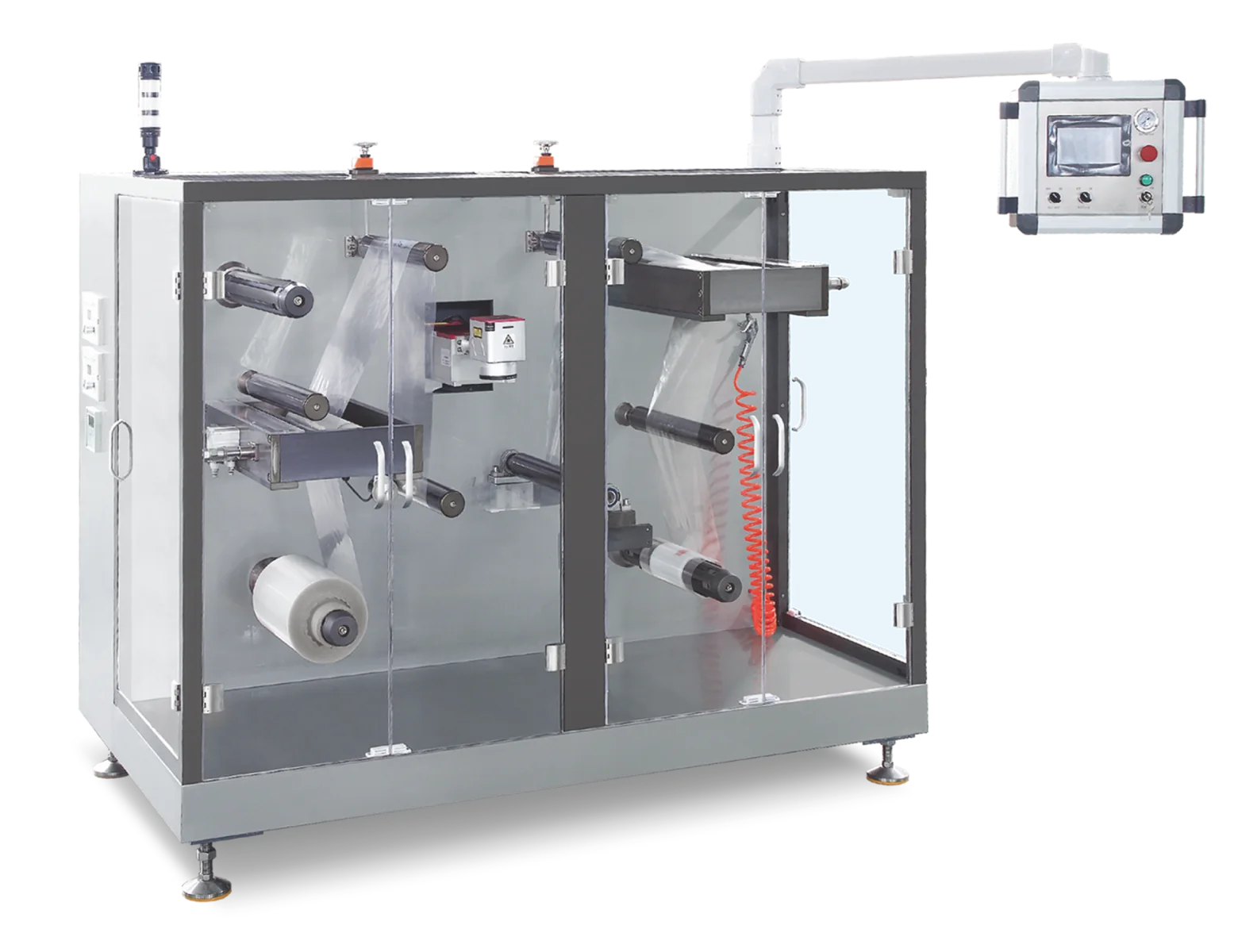
- Film-making role: equipment used to form and dry the oral film web
- Packaging role: equipment used to package the finished oral film format
- Line integration role: planning how upstream, core-process, and downstream sections connect
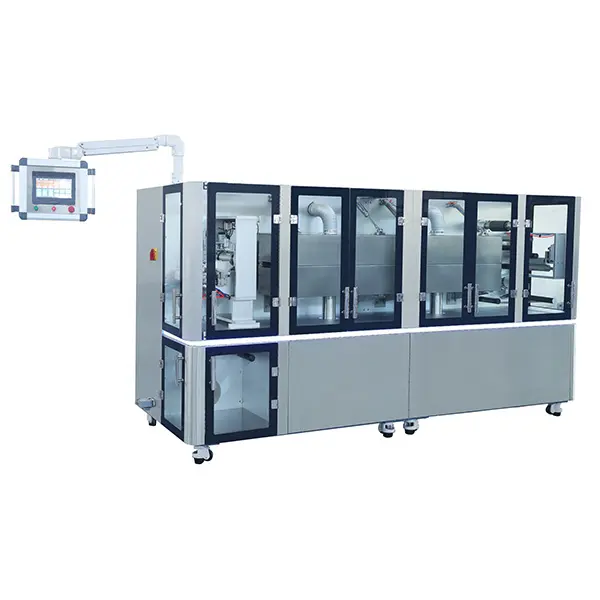
Within Aligned Machinery’s ODF scope, buyers can discuss these roles around products such as the ZRX-30/50 for formulation preparation, the OZM Series for oral film making, and KFM oral film packaging equipment for downstream packaging roles. That does not mean every project uses the same structure. It means the evaluation becomes clearer when each role is defined first.
If you want to explore the equipment category itself, see our oral film making machine overview. If you are planning a broader line discussion, our ODF production line solution page is the better starting point.
How Aligned Machinery supports ODF workflow discussions
Aligned Machinery supports oral thin film projects as a pharmaceutical machinery supplier with coverage across dosage-form equipment, packaging machinery, and production workflow planning. For ODF projects, we help buyers organize scope clearly and connect process requirements to equipment roles.
A useful early discussion with Aligned Machinery typically covers:
- product or material type
- target output with units
- film format or dimensions
- web width and unit size
- available utilities
- operating environment
- desired upstream and downstream scope
- packaging style and transfer boundary
- destination market and documentation expectations
That approach helps keep the discussion practical. Instead of jumping straight to a final model decision, buyers can first define whether the priority is formulation prep, film making, drying, packaging, or a connected production workflow.