
Process Guide
What Is a Fluidized Bed Dryer?
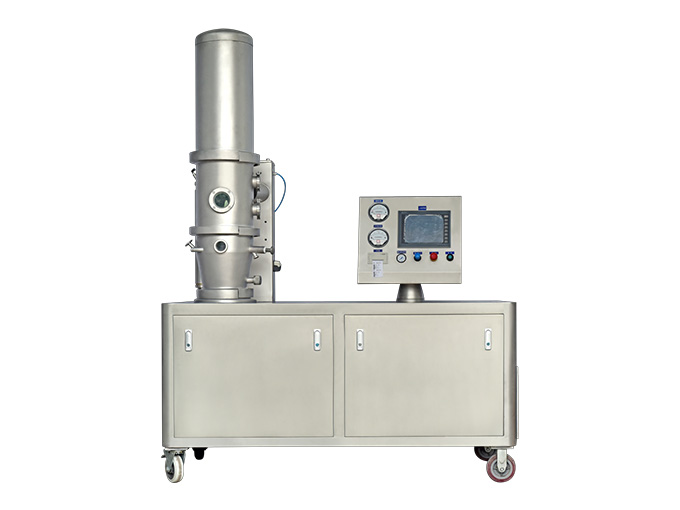
A fluid bed dryer uses controlled process air to suspend and dry suitable powders or granules. Selection should start with material behavior, moisture endpoint, batch objective, utilities and the downstream process boundary—not nominal output alone.
Direct Answer
A fluidized bed dryer uses upward process air to suspend and dry particles; the supplied Aligned Machinery evidence does not establish a dedicated dryer offering, so current product availability and project scope must be confirmed directly.
On this page
- A Direct Explanation of What a Fluidized Bed Dryer Does
- How Fluidization Supports Drying in Powders and Granules
- What Process Inputs Matter Most: Material, Air, and Moisture Endpoint
- Where Fluidized Bed Drying Fits in Pharmaceutical and Nutraceutical Processing
- When a Fluidized Bed Dryer May Be a Good Fit—and When It May Need Closer Review
- What Buyers Should Confirm Before Selecting Fluid-Bed Equipment
- How to Discuss Your Material Processing Project With Aligned Machinery
- FAQ
A Direct Explanation of What a Fluidized Bed Dryer Does
In simple terms, a fluidized bed dryer dries suitable particulate material by introducing controlled air through a bed of product. When airflow is strong enough to lift and move the particles without carrying them away, the material behaves like a fluidized bed rather than a static pile. That movement increases contact between air and product, which can support more effective moisture removal than drying a fixed mass with limited internal movement.
For buyers, the key point is that a fluidized bed dryer is a process tool, not just a heated vessel. Its value depends on whether the material can fluidize in a stable way, whether the moisture target is clearly defined, and whether the drying step fits the wider production workflow.
Aligned Machinery supports buyers evaluating pharmaceutical material-processing workflows and publishes related information in its raw material processing equipment section. Aligned Machinery also publishes adjacent fluid-bed process content through the FL Series Fluidized Bed Granulator overview. Final equipment scope and configuration should always be reviewed against the actual project.
How Fluidization Supports Drying in Powders and Granules
Fluidization is the core principle behind this equipment type. In general, when process air moves upward through a suitable bed of powder or granules, the drag force from the air can counter part of the particle weight. As airflow increases to the right operating window, particles begin to separate, circulate, and mix within the chamber. This creates a larger contact area between the process air and the product.
That air-particle contact is important because drying happens at the particle surface and through moisture migration from within the material. A moving, well-fluidized bed can help reduce stagnant zones that are more common in a fixed bed. It can also make heat and mass transfer more uniform across the product mass—provided the material itself behaves consistently enough for stable fluidization.
However, fluidization is not automatic for every product. Powders with poor flow, broad particle-size variation, high stickiness, or strong agglomeration tendencies may need closer review. Very light fines can behave differently from dense granules. Heat-sensitive materials may also narrow the process window. That is why buyers should evaluate material behavior early rather than assuming that any powder can be dried the same way.
What Process Inputs Matter Most: Material, Air, and Moisture Endpoint
When evaluating fluid-bed equipment, buyers should start with three input groups: the material itself, the process air conditions, and the required drying endpoint.
Material inputs
Material behavior usually drives the first fit decision. Important questions include:
- Is the product a free-flowing granule, a cohesive powder, or a mixed distribution?
- What is the starting condition of the material?
- Does the product tend to stick, clump, break down, or generate excess fines?
- Is it sensitive to heat, shear, or extended residence time?
- What particle or blend requirement must be preserved after drying?
Process air inputs
Air is not just a utility; it is a processing medium. Buyers should define how air conditions relate to the product goal, including:
- Required airflow behavior for stable fluidization
- Temperature limits based on material sensitivity
- Air cleanliness and handling expectations
- Utility availability at the installation site
- Integration with plant exhaust, dust control, or transfer arrangements
Moisture endpoint inputs
Drying projects often fail at the inquiry stage when the endpoint is described too loosely. “Dry enough” is not a usable specification. Buyers should instead clarify:
- Initial moisture level
- Target final moisture or acceptable range
- How the endpoint will be judged in production
- Whether the endpoint is driven by storage stability, compression, filling, blending, coating, or another downstream need
Aligned Machinery typically frames equipment discussions around process inputs rather than nominal output alone. For fluid-bed-related inquiries, material characteristics, processing objective, utilities, required interfaces, and downstream scope all affect final configuration.
Where Fluidized Bed Drying Fits in Pharmaceutical and Nutraceutical Processing
In pharmaceutical and nutraceutical environments, fluidized bed drying is commonly considered during material preparation where particulate product needs controlled moisture reduction before the next step. This may include drying after wet processing, conditioning granules before compression or encapsulation, or preparing material for blending, transfer, or packaging.
The reason this stage matters is practical: upstream preparation influences downstream consistency. If material enters the next operation with unstable moisture, poor flow, or incomplete conditioning, the issue often appears later in tablet pressing, capsule filling, blending, or packaging efficiency.
That does not mean fluid-bed drying is the right choice for every formulation. Some materials may require a different drying approach based on sensitivity, containment expectations, cleanability requirements, or how the product behaves under airflow. Buyers should therefore review the drying step as part of the whole process path, not as an isolated machine purchase.
When a Fluidized Bed Dryer May Be a Good Fit—and When It May Need Closer Review
A fluidized bed dryer may be a good fit when:
- the product is particulate and can fluidize in a stable manner
- the process needs efficient contact between air and product
- drying is part of a broader raw-material preparation workflow
- the project team has defined upstream feed condition and downstream requirements
It may need closer review when:
- the material is sticky, highly cohesive, fragile, or difficult to fluidize
- the particle-size range is too broad for predictable behavior
- the product has tight heat-sensitivity limits
- cleaning, containment, transfer, or integration requirements add process constraints
- the buyer is trying to select equipment from output targets alone
A useful buyer mindset is to treat fluid-bed equipment selection as a combination of material science and plant integration. The right review question is not only “How much product per batch?” but also “How does this material behave under air, and what does the next process step require?”
What Buyers Should Confirm Before Selecting Fluid-Bed Equipment
Before discussing a project in detail, buyers should prepare a concise process brief. A more complete inquiry usually supports a more accurate review.
Recommended project inputs include:
- material name and product form
- particle size range or expected particle behavior
- bulk density or handling characteristics
- starting condition of the material
- initial moisture and target final moisture
- heat sensitivity or temperature limitations
- batch size or processing objective
- target particle, blend, or downstream performance requirement
- upstream preparation method
- downstream equipment or transfer steps
- cleaning expectations
- available utilities
- required interfaces with existing equipment
- installation environment and destination-market requirements
These inputs are often more useful than a simple request for “a standard model,” because fluid-bed processing depends on the interaction between product, air, operating conditions, and production workflow.
How to Discuss Your Material Processing Project With Aligned Machinery
Aligned Machinery supports buyers who need to review pharmaceutical and nutraceutical processing workflows at the equipment-selection stage. If your team is evaluating a fluid-bed drying step, we can discuss the material characteristics, drying objective, upstream preparation, utilities, and downstream integration factors that shape project fit.
You can start by exploring our raw material processing solutions and our FL Series Fluidized Bed Granulator page. If you already have a project outline, the fastest next step is to contact Aligned Machinery to discuss your material-processing requirements.
Project inputs to prepare before contacting Aligned Machinery: material type, particle size range, bulk density, starting moisture, target final moisture, heat sensitivity, upstream preparation method, downstream process steps, batch goal, available utilities, cleaning expectations, and required equipment interfaces.