Automation Guide
When to Choose an Automatic Capsule Filling Machine
An automatic capsule filling machine is worth evaluating when recurring labor, scheduling pressure and line coordination—not simply a desire for a higher brochure speed—have become production constraints. The decision should follow a readiness review covering stable product conditions, campaign pattern, changeover burden, staffing, utilities and downstream demand.
Direct Answer
Choose automatic capsule filling when the process is stable enough to benefit from repeatable automated cycles and manual coordination has become a measurable production constraint; low-volume, highly variable or formulation-development work may still favor a semi-automatic route.
On this page
Use a readiness test before moving to automatic filling
Automation should solve a defined operating constraint. Review whether operator-dependent pacing, repeated batches, schedule pressure or uneven handoff to packaging is limiting the current process.
Signals that support automation
- Demand is recurring enough to plan stable production campaigns.
- Manual capsule handling repeatedly constrains staffing or shift output.
- Downstream equipment needs a steadier capsule supply.
- The product and capsule format are sufficiently stable for repeatable setup.
Signals to review first
- Batch volumes remain low or highly irregular.
- Formulation behavior is still changing.
- Upstream preparation or downstream packaging is the real bottleneck.
- Frequent SKU changes dominate available production time.
Model the real production week, not nominal speed
Compare planned batches, shifts, campaign length, staffing and downstream demand. Rated output does not describe cleaning time, format changes, material interruptions or waiting between line stages. A useful assessment estimates usable production time and identifies which constraint automation is expected to remove.
- Expected batches and shifts per week
- Campaign length and number of SKUs
- Operator roles around loading, monitoring and transfer
- Required pace into polishing, inspection or packaging
Confirm process stability before increasing automation
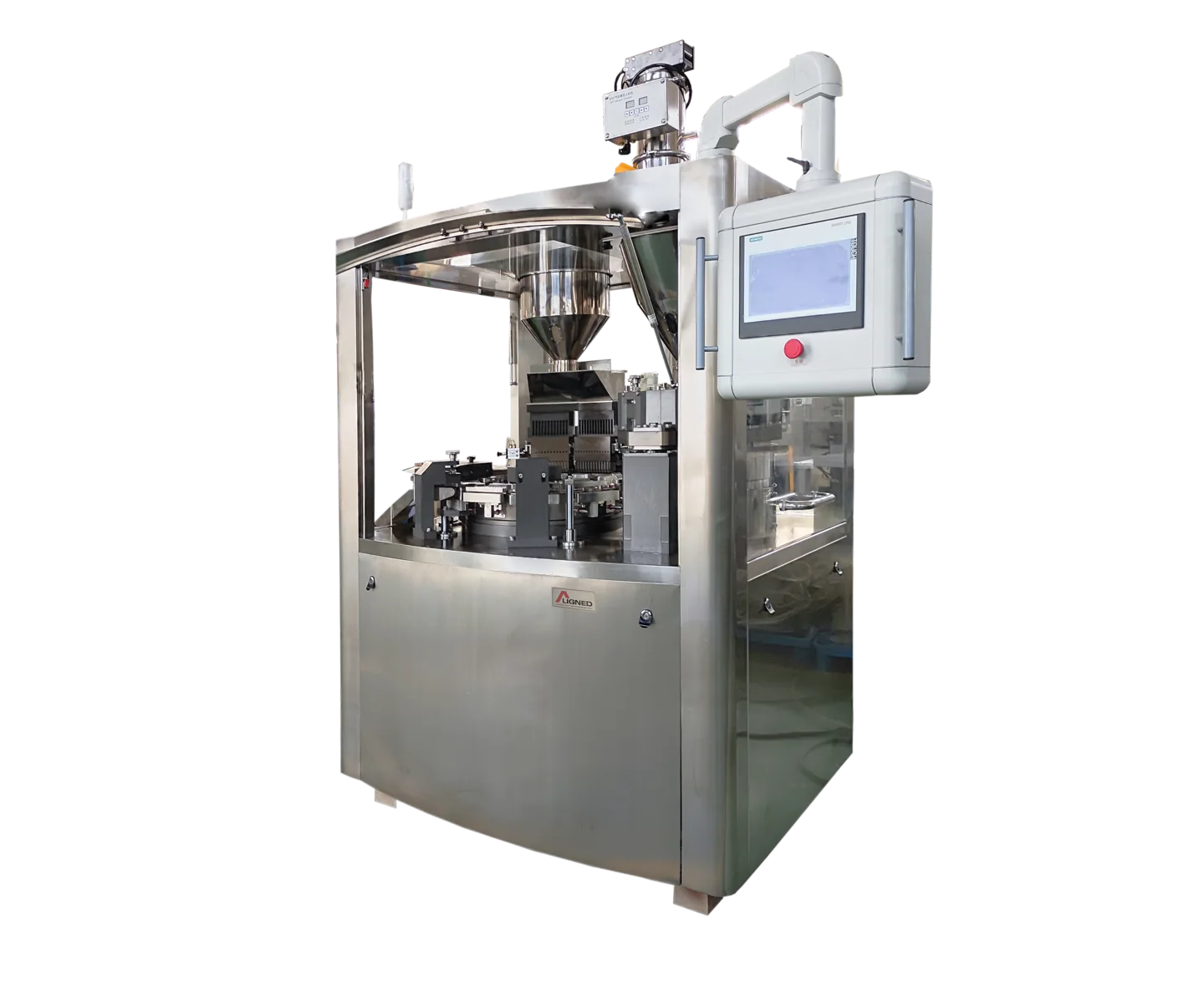
Automation cannot compensate for an undefined capsule format or unstable fill behavior. Confirm hard-capsule format, shell material, powder or granule characteristics and target dose before comparing automatic equipment. Aligned Machinery publishes the CFK Series for compatible powders or granules in hard capsules; final suitability remains formulation- and project-specific.
Compare changeover burden and operator access
For multi-product plants, usable capacity depends on access, cleaning and change-part handling. Ask the supplier to walk through routine product-contact cleaning, format changes, inspection points, operator tasks and planned maintenance. This section is an operating review, not a claim about a universal cleaning time.
Define the automation boundary around the filler
Decide whether the purchase covers the filler only or a coordinated flow into polishing, inspection and packaging. Document material presentation, capsule supply, utilities, controls and accepted-product handoff so that interfaces are included in the technical discussion.
Review the CFK automatic capsule filling machine for published product context, or compare the broader capsule machine category.
Prepare a business case and project brief
Record the current constraint, desired operating change and project inputs before requesting a recommendation. Include capsule format, material, target dose, required output with units, campaign pattern, staffing, utilities, environment, changeover priorities and downstream scope.
Contact Aligned Machinery with this brief for a project-specific review.